Mohamed Abdelnaby - PhD Student in Computer Science | HPC & AI Research
Skip to main content

Mohamed Abdelnaby

CS PhD Student
Virginia Tech | Computer Science

Passionate researcher at the intersection of High-Performance Computing, Machine Learning, and Scientific Computing, focused on developing scalable computational frameworks that accelerate scientific discovery and unlock insights from massive datasets.

Mohamed Abdelnaby

Recent Updates

Apr 2026
First Author Paper Published in Journal of Computational Biology!
Our paper "Random Projection Methods Outperform Principal Component Analysis for Dimensionality Reduction in Single Cell RNA-Seq" is now officially published in the Journal of Computational Biology. Read it at doi.org/10.1177/15578666261436821
Feb 2026
First Author Paper Accepted at JCB (Journal of Computational Biology)
Our paper titled "Random Projection Methods Outperform Principal Component Analysis for Dimensionality Reduction in Single Cell RNA-Seq" got accepted for publication at Journal of Computational Biology
Aug 2025
Started PhD at Virginia Tech
Excited to begin my PhD journey in Computer Science at Virginia Tech, focusing on High Performance Computing and Machine Learning/AI research.
May 2025
Graduated with MS in Computer Science
Successfully completed my Master's degree in Computer Science at the University of Oklahoma with focus on applied AI/ML.
Jan 2025
Won MIT Reality Hacks 2025
Achieved second place at MIT Reality Hacks Founders Lab Track, the world's largest XR hackathons.
Jan 2025
Paper Presented at ICCABS 2025
Presented research on benchmarking Random Projections and PCA for downstream analysis tasks in single-cell RNA sequencing. Paper accepted in Springer Lecture Notes in Bioinformatics proceedings.
Nov 2024
Won at Stanford Immerse the Bay 2024 Hackathon
Our project, HomeGen.AI, was one of the winning projects at Stanford.
Jul 2024
Poster Presented at ISMB 2024
Presented poster on dimensionality reduction methods for single cell RNA sequencing data at ISMB 2024.
Apr 2024
Presented at RECOMB 2024
Presented our research on random projections for high-dimensional single cell RNA-seq data at RECOMB 2024.

Publications & Research

Peer-Reviewed Publications

Random Projection Methods Outperform Principal Component Analysis for Dimensionality Reduction in Single Cell RNA-Seq

2026
Mohamed Abdelnaby, Marmar R. Moussa
Journal of Computational Biology (JCB)
Peer-Reviewed Publication
Publisher: Journal of Computational Biology · Published: April 27, 2026 View Publication

A Benchmarking Study of Random Projections and Principal Components for Dimensionality Reduction Strategies in Single Cell Analysis

2025
Mohamed Abdelnaby, Marmar R. Moussa
Proceedings of the 13th International Conference on Computational Advances in Bio and Medical Sciences (ICCABS); Georgia, USA
Peer-Reviewed Publication
Publisher: Springer, Cham, Lecture Notes in Computer Science, vol 15599 · Published: November 1, 2025 View Publication

Position Papers

Enhancing Inclusivity in Education through XR and AR with Cognitive-Affective Learning Principles for Students with Special Needs

2024
Mohamed Abdelnaby, et al.
2024 ACM Conference on Human Factors in Computing Systems (CHI); Honolulu, Hawaii, USA
Position Paper

Research Posters

Predicting T-Cell Receptor Specificity and Phenotype Using Integrated Classical and Pre-Trained Protein Language Models

2025
Marmar R. Moussa, Mohamed Abdelnaby
Proceedings of the 16th ACM International Conference on Bioinformatics, Computational Biology, and Health Informatics (ACM BCB); Philadelphia, Pennsylvania, USA
Research Poster

Benchmarking Principal Component and Random Projection dimensionality reduction methods for single cell RNA sequencing data

2024
Mohamed Abdelnaby, Marmar R. Moussa
2024 International Conference on Intelligent Systems for Molecular Biology (ISMB); Montreal, Quebec, Canada
Research Poster

Random Projections techniques for locality-preserving representation of high-dimensional single cell RNA-seq

2024
Mohamed Abdelnaby, Marmar R. Moussa
2024 International Conference on Research in Computational Molecular Biology (RECOMB); Cambridge, MA, USA
Research Poster

Integrating Accelerometers & Neural Networks for Enhanced Soccer Analytics

2024
Mohamed Abdelnaby, et al.
2024 University of Oklahoma – Tulsa REACH-OUT Poster Forum; Tulsa, OK, USA
Research Poster

Research Projects

Selected deep-dive research work bridging systems, machine learning, and scientific computing.

Peer-Reviewed Paper · Journal of Computational Biology2026

Random Projection Methods for Single-Cell RNA-Seq Dimensionality Reduction

PCA is the default tool for scRNA-seq, but it scales poorly with dataset size, is sensitive to outliers, and assumes linearity. We benchmarked PCA against several random projection methods, including a Matching Sparsity Random Projection (MSRP) algorithm we introduce, which adapts projection density to the input's sparsity pattern. Across labeled and unlabeled datasets, RP methods matched or beat PCA on clustering quality and locality preservation, and ran substantially faster.

PythonscRNA-seqRandom ProjectionsPCAClusteringBioinformatics
Research Project · Live Demo2026

NeuroAgent: A Multi-Agent LLM Framework for Brain Imaging

A multi-agent LLM framework for 3D brain imaging. A unified five-agent architecture is deployed across multiple brain-imaging tasks and evaluated against five LLMs spanning 3B to 20B parameters from four families: Llama-3.2 (3B), Mistral (7B), Llama-3.1 (8B), Phi-4 (14B), and gpt-oss (20B). Ships with a live Streamlit demo for inspecting agent reasoning end-to-end.

PyTorchFreeSurferBrainLMBrainSegFounderLLM OrchestrationRAGvLLMStreamlit
Research Project2026

Loss-Aware Computing for Medical Image Restoration

Systematic loss-function characterization and GPU profiling framework for deep-learning-based low-dose CT image restoration. Spans six NVIDIA GPUs across five hardware generations: Pascal (P100), Volta (V100), Ampere consumer (RTX 3090), Ampere datacenter (A100), Hopper (H100), and Blackwell (RTX PRO 6000 Server Edition). Kernel-level analysis with NVIDIA Nsight Systems covers L2/HBM cache utilization, memory-hierarchy behavior, warp occupancy, and Roofline operational intensity across loss functions and batch sizes, paired with a formal Amdahl's Law treatment of how loss cost scales with backbone speedup on modern accelerators.

PyTorchDDnetNVIDIA Nsight SystemsSLURMHPCRoofline Analysis
Research Project2024

MuseumBot: RAG-Based Interactive Museum Companion

Interactive React Native museum application using a LLaMA 3.2 chatbot to deliver context-aware artwork information. Built on a FAISS-powered semantic search index over curated museum corpora, with a retrieval-augmented generation (RAG) architecture that grounds each response in retrieved passages.

React NativeLLaMA 3.2FAISSRAGSemantic Search
Research Project2024

Predictive Soccer Analytics: Computer Vision + Sensor Fusion

Computer vision system using OpenCV and convolutional neural networks to track soccer ball trajectories, combined with recurrent networks processing accelerometer time-series data. Sensor fusion across modalities was used to predict player injury risk from movement patterns.

PythonOpenCVCNNRNNSensor Fusion
Research Project2022

Urban Scaling Analytics of the Roman Empire

Big-data analysis of 500,000+ Latin inscriptions to map urban scaling patterns across the Roman Empire. Built clustering and regression pipelines to quantify how socio-economic indicators scale with city size, applying modern computational methods to a historical dataset.

PythonPandasClusteringRegressionBig Data

Featured Projects

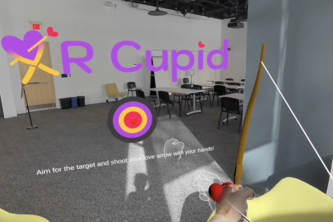
XR Cupid (Winner | MIT Reality Hacks 2025)
Meta Quest 3Convai

XR Cupid (Winner | MIT Reality Hacks 2025)

2025

VR dating coach app using personality-based AI coaching with real-time eye contact and posture tracking, designed specifically for neurodivergent users seeking dating guidance.

HomeGen (Winner | Stanford Immerse the Bay 2024)
ShapesXRAWS

HomeGen (Winner | Stanford Immerse the Bay 2024)

2024

Immersive 3D home visualization tool converting architectural floor plans into true-to-scale VR experiences, enabling clients to walk through homes before construction begins.

ArticulAIte (Stanford Tree Hacks 2025)
UnityMeta Quest 3

ArticulAIte (Stanford Tree Hacks 2025)

2025

VR-enabled AI interview automation platform generating structured interviews with AI avatars, featuring automated question generation, customizable evaluation criteria, and transparent post-interview analysis.

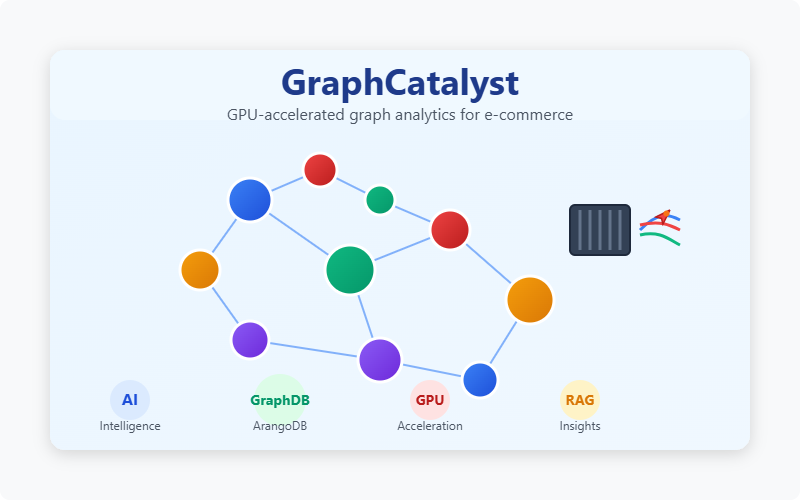
GraphCatalyst (Building the Next-Gen Agentic App with GraphRAG & NVIDIA cuGraph)
cuGraphArangoDB

GraphCatalyst (Building the Next-Gen Agentic App with GraphRAG & NVIDIA cuGraph)

2025

GPU-accelerated graph analytics platform for e-commerce networks with cuGraph integration, natural language querying, and real-time product recommendation insights.

Tools & Technologies

The toolchain I use day-to-day across research, systems work, and applied projects.

Machine Learning & AI

PyTorchscikit-learnHugging FacevLLMLangChainLLMsComputer VisionDeep Learning

Systems & HPC

CUDANVIDIA Nsight ComputeSLURMParallel ComputingDistributed TrainingRoofline Analysis

Languages

PythonC++CJavaScriptMATLABBash

Scientific Tooling

FastSurferfMRIPrepNumPyPandasSciPyMatplotlib

Web & Cloud

ReactNode.jsFirebaseAWSStreamlitDocker

Dev Tools

GitLinuxVS CodeJupyterLaTeXCursor

Research Interests

High-Performance Computing

Developing scalable HPC systems for computational biology, optimizing parallel algorithms for massive datasets, and creating efficient frameworks that bridge the gap between raw computational power and scientific discovery.

Parallel ComputingScalabilityPerformance Optimization

Machine Learning at Scale

Designing distributed ML frameworks for scientific applications, exploring dimensionality reduction techniques for genomic data, and implementing large-scale neural networks on supercomputing infrastructure.

Distributed SystemsDeep LearningScientific ML

Scientific Computing

Developing computational frameworks for complex scientific simulations, building scalable pipelines for multi-domain research applications, and applying HPC to solve challenging problems across disciplines like biology, physics, and climate modeling.

Scientific SimulationMulti-domainComputational Methods

Professional Experience

Jan 2026 Present
Graduate Teaching Assistant
Virginia Tech
Blacksburg, VA
Supporting 80 undergraduate students in CS 3754 (Cloud Software Engineering), covering cloud architecture, distributed systems, and modern software deployment practices.
Key Achievements:
  • Designed and implemented autograder infrastructure for programming assignments, automating evaluation workflows and ensuring consistent, objective grading across all student submissions
  • Developed grading rubrics in collaboration with course faculty, establishing clear assessment criteria for both coding assignments and cloud deployment projects
  • Conduct weekly office hours to assist students with cloud development concepts, debugging, and project architecture decisions
Cloud ArchitectureDistributed SystemsAutogradingAWS/GCPMentorship
Aug 2025 Dec 2025
Graduate Teaching Assistant
Virginia Tech
Blacksburg, VA
Served as Graduate Teaching Assistant for CS 5704 (Software Engineering), supporting graduate students in advanced software engineering practices and industry-aligned technical proficiency.
Key Achievements:
  • Supported over 20 graduate students in mastering Agile methodology, DevOps workflows, and software lifecycle management
  • Conducted weekly office hours for hands-on development in GitHub, CI/CD pipelines, Docker containerization, and project design
  • Collaborated with faculty on grading rubrics and project evaluation for team collaboration, system architecture, and design patterns
  • Provided structured feedback to enhance students' real-world readiness and technical capabilities
Software EngineeringAgile/DevOpsCI/CDDockerMentorship
May 2025 Present
Computer Science Tutor
Self-Employed
Remote
Delivering personalized instruction to students across computer science and data-focused subjects, with 1,400+ hours of teaching and consistently high satisfaction ratings.
Key Achievements:
  • Delivered 1,400+ hours of instruction to 100+ students across computer science and data-focused subjects
  • Built and launched a dedicated tutoring website to streamline outreach, scheduling, and student intake
  • Designed structured lesson plans that connect theory with hands-on projects using Python, TensorFlow, and scikit-learn
Machine LearningData SciencePythonTensorFlowCurriculum Design
May 2025 Aug 2025
Summer Research Intern
University of Oklahoma
Norman, OK
Advanced research in Protein Large Language Models for T-Cell Receptor specificity and phenotype prediction, with poster submission to ACM-BCB 2025.
Key Achievements:
  • Benchmarked state-of-the-art models including ESM (Facebook AI), ProtBERT, and ProtT5 across multiple configurations
  • Designed large-scale experimental pipelines for biological sequence understanding and protein analysis
  • Leveraged HPC clusters for distributed training, GPU-accelerated inference, and parallelized model optimization
  • Significantly improved scalability, training efficiency, and predictive accuracy through advanced computational methods
Protein LLMsHPCDeep LearningBioinformaticsGPU Computing
Jul 2024 May2025
Graduate Research Assistant
University of Oklahoma
Norman, OK
Leading advanced research in bioinformatics and computational biology, focusing on single-cell RNA sequencing analysis and dimensionality reduction techniques.
Key Achievements:
  • Developed optimized dimensionality reduction and clustering pipelines for single-cell RNA sequencing data
  • Benchmarked PCA and Random Projection methods on high-dimensional datasets with parallelization on multi-CPU systems
  • Presented research at RECOMB 2024 and ISMB 2024, with paper accepted at ICCABS 2025
  • Achieved significant improvements in clustering accuracy and large-scale data processing workflows
BioinformaticsSingle-cell RNA-seqPCARandom ProjectionsParallel Computing
May 2024 Present
Technology Director
Hacklahoma
Norman, OK
Promoted to lead technology initiatives for Oklahoma's largest hackathon, managing development teams and driving innovation in event technology.
Key Achievements:
  • Leading a team of 4 software developers in creating the Hacklahoma 2025 website
  • Targeting 30% increase in user engagement through enhanced platform features
  • Integrating 3 key features projected to enhance user interaction by 15%
  • Streamlining event management processes to improve overall hackathon efficiency
Team LeadershipWeb DevelopmentProject ManagementEvent Technology
Aug 2023 May 2024
Vice President Internal
OU UI/UX Design Club
Norman, OK
Led internal operations for the UI/UX Design Club, organizing high-impact events and coordinating academic research initiatives.
Key Achievements:
  • Hosted events with industry-leading speakers from Microsoft, Paycom, and IBM for 100+ members
  • Led conference submissions for ACM-CHI, coordinating acceptance of 3 workshop papers
  • Organized workshop on Inclusive AR focusing on accessible augmented reality experiences
  • Enhanced learning experience and professional development opportunities for club members
Event ManagementAcademic CoordinationUI/UX DesignIndustry Relations
May 2023 May 2024
Software Developer
Hacklahoma
Norman, OK
Developed and maintained the official Hacklahoma website and registration platform, serving thousands of participants and stakeholders.
Key Achievements:
  • Managed full-cycle development of Hacklahoma 2024 website for 1,000+ users
  • Created interactive and user-friendly interface for organization and event information
  • Engineered online registration system optimizing data collection for 300+ students
  • Boosted participant registration and engagement by 20% through streamlined sign-up process
Full-stack DevelopmentUser ExperienceDatabase DesignWeb Optimization
May 2022 May 2023
Project Manager
OU Artificial Intelligence Organization
Norman, OK
Managed technical projects and educational initiatives for the university's AI organization, fostering learning and innovation in artificial intelligence.
Key Achievements:
  • Led technical projects including workshops, seminars, and competitions for 100+ members
  • Organized OU AI Symposium facilitating learning and collaboration among students
  • Coordinated 100+ participant events featuring talks on ML, NLP, and computer vision
  • Focused on practical applications of machine learning and AI technologies
Project ManagementAI/ML EducationEvent CoordinationTechnical Leadership

About Me

I'm a Computer Science PhD student at Virginia Tech, working at the intersection of high-performance computing, machine learning, and scientific computing. My research focuses on developing scalable computational frameworks that accelerate scientific discovery and unlock insights from massive datasets.

My research journey began as a freshman exploring adversarial machine learning, then evolved into computational biology where I worked on dimensionality reduction techniques for single-cell RNA sequencing analysis. Most recently, I've been developing protein language models for T-cell receptor analysis and building distributed training systems for biological data. Now, my work centers on creating efficient ML systems specifically designed for scientific computing applications.

Beyond research, I'm passionate about education and mentorship. I run a tutoring platform where I've worked with students across machine learning, data science, and algorithms, helping them bridge the gap between theory and practice. I grew up in Cairo, Egypt, where my curiosity about how computers work sparked a journey that led me through a bachelor's in Computer Engineering, a master's in Computer Science, and now my PhD.

Outside the lab, I'm a husband who values family above all else, a game developer who enjoys both playing and building games, and someone who finds balance through chess, traveling, and swimming. I'm also active in the hackathon community, having won at MIT Reality Hacks and Stanford Immerse the Bay, and I love the collaborative energy of building innovative solutions under pressure.
Education Journey

PhD in Computer Science
Virginia Tech
2025 - Present
MS in Computer Science
University of Oklahoma
2024 - 2025
BS in Computer Engineering
University of Oklahoma
2020 - 2024

Awards & Recognitions

Selected honors and competitive wins recognizing my work in immersive technology and applied AI.

2025

MIT Reality Hacks 2025

MIT Media Lab

Hackathon Winner
2024

Stanford Immerse the Bay 2024

Stanford University

Hackathon Winner